Stub

This page is a stub. It will be expanded to a full guide in the future!

Zeeman Splitting

Use magnetic fields to change the wavelength of light

The Zeeman effect is quantum mechanical effect where electronic energy levels split slightly in the presence of a magnetic field. The slightness of this effect makes it usually very difficult to observe, but this demo/experiment uses the amazing properties of frequency beating (heterodyne detection) to make this effect visible with relatively modest equipment.
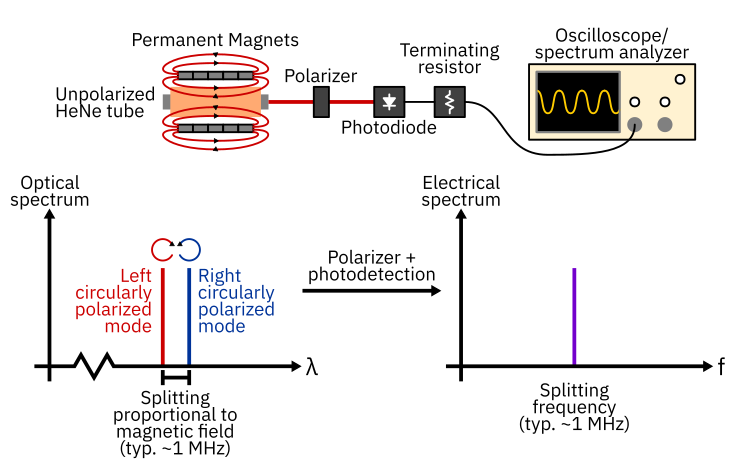
Setup: an unpolarized HeNe tube between permanent magnets, followed by a polarizer and a photodiode with a terminating resistor, connected to an oscilloscope or spectrum analyzer. Below, the optical spectrum shows left- and right-circularly polarized modes separated by a splitting proportional to the magnetic field (typically ~1 MHz); after the polarizer and photodetection, the electrical spectrum shows a single line at that splitting frequency.
Budget
$300–$1000
Required tools
2–3
Manufacturing difficulty
4–5
Alignment difficulty
1–3
Portability
3
Setup time
3–5
Presentation complexity
7–9
Concept complexity
8–9
WOW factor
1–2
What do these scores mean? →
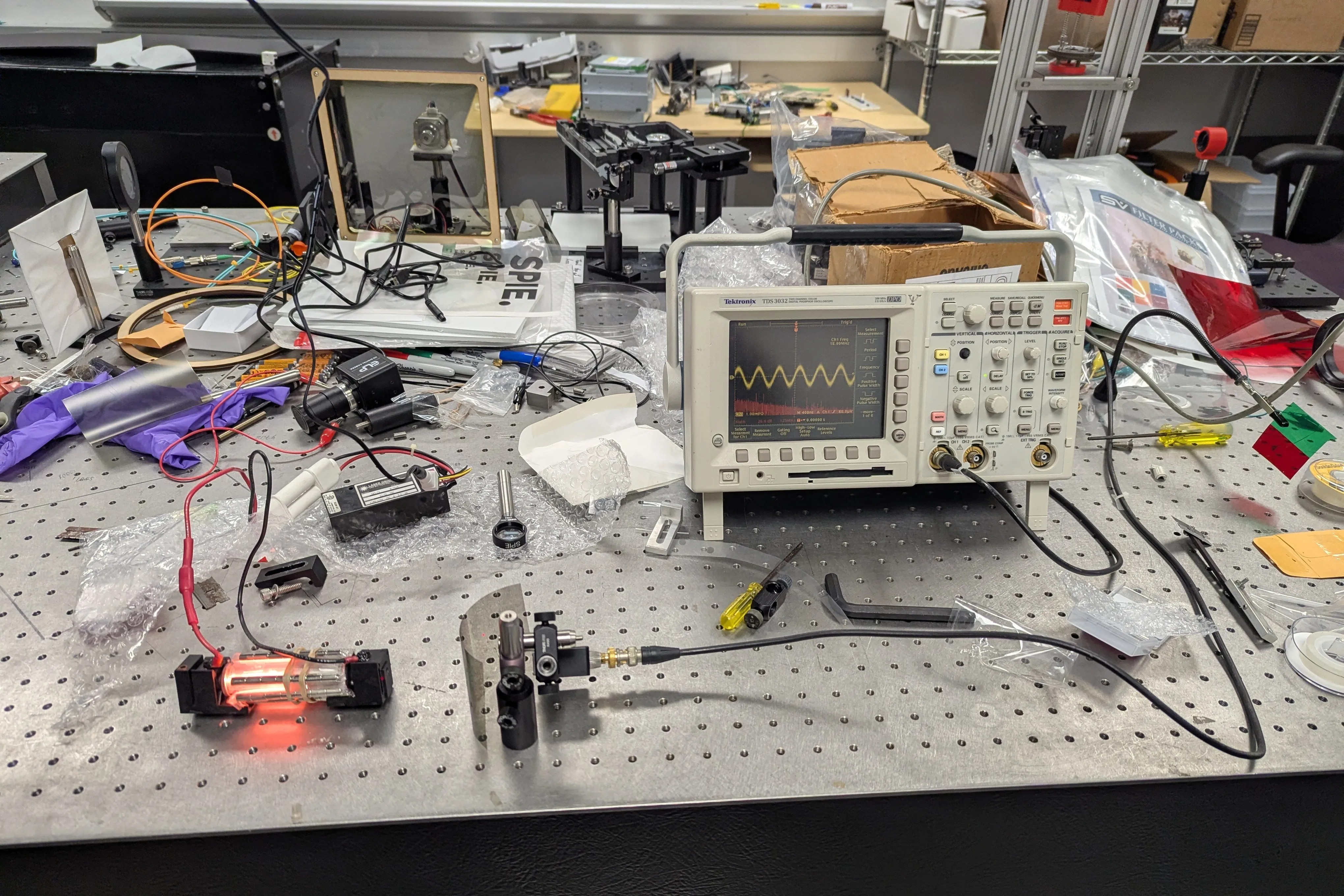
The demo roughly put together on a big optical table in the lab.
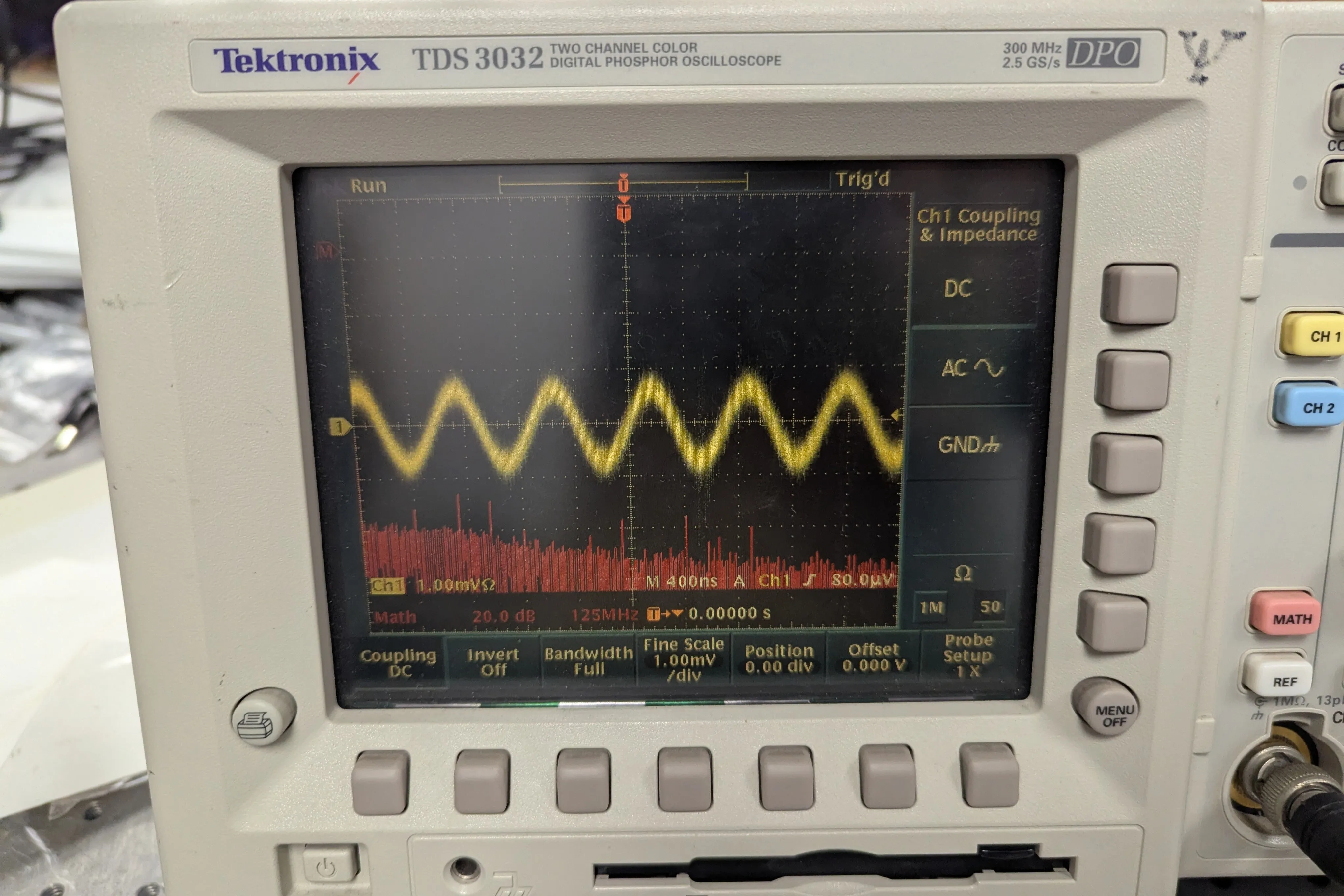
A close-up of the beatnote signal measured by the oscilloscope.
Contents01Opportunities for improvement
01

Opportunities for improvement

  • Use an electromagnet instead of permanent magnets, so the amount of Zeeman splitting can be varied! This makes the demo substantially more compelling.