01
Supplies
02
Presentation ideas
Main idea
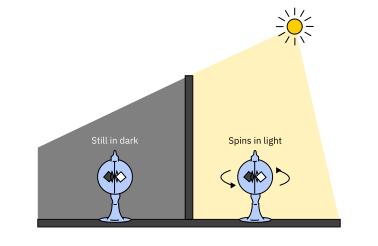
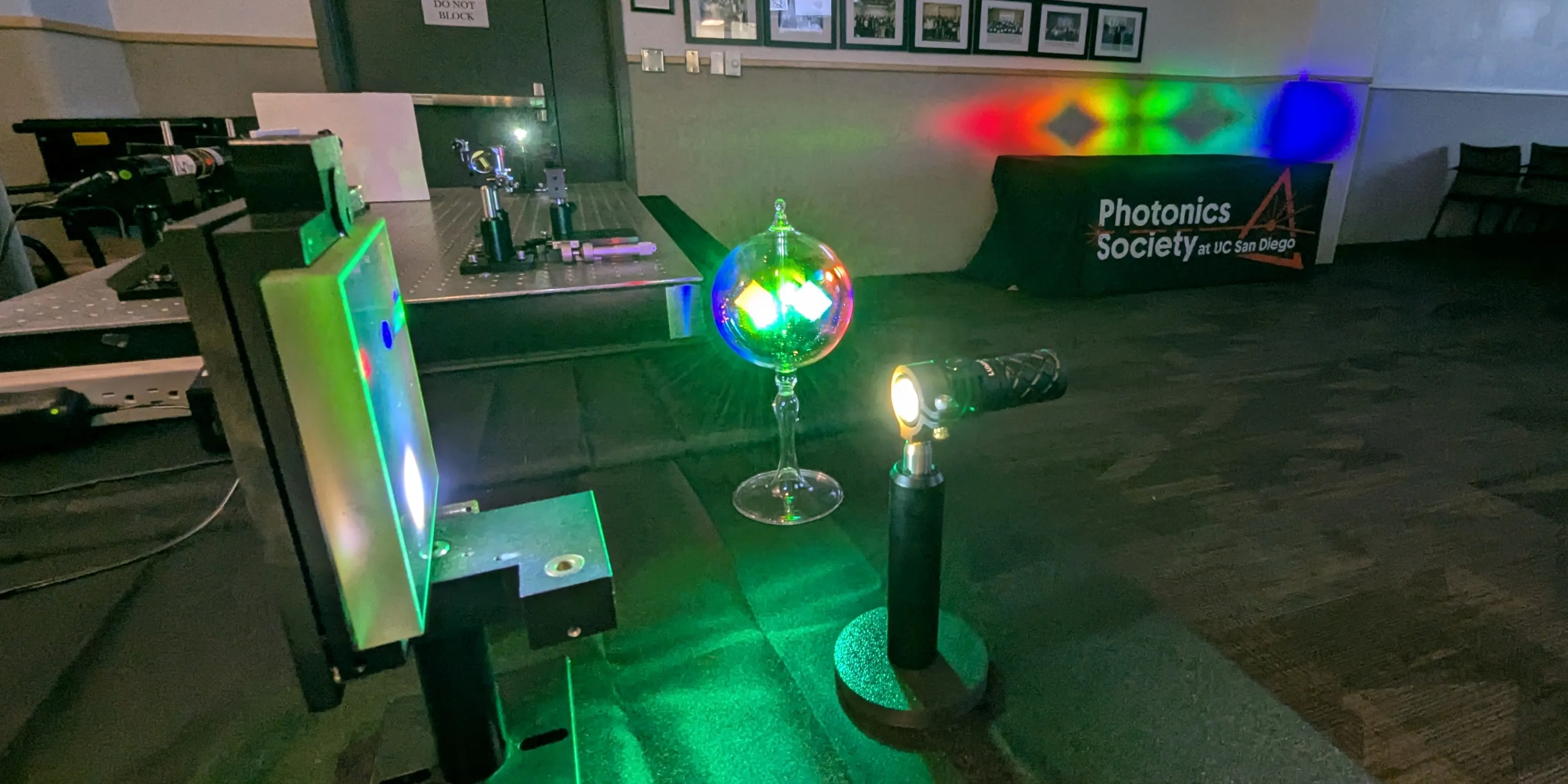
When showing off the Crookes radiometer, make sure you have an environment where you can show it in both the dark and the light. Show attendees that the radiometer doesn’t really spin in the dark, but spins in the light (sunlight is best, but a flashlight works too).
- Ask attendees what they think might cause this. Hints to guide them to the right explanation:
- Why do you think it’s in a glass bulb? What could that be for?
- It’s for lower air pressure/resistance.
- What do you notice about the vanes on the rotor?
- They are shiny on one side but not the other.
- Does it spin both ways, or only one way?
- It only spins one way, away from the dark side.
- Why do you think it’s in a glass bulb? What could that be for?
Explaining it
See the explanation of the mechanism on Wikipedia. The most important points:
- The radiometer was originally designed to illustrate radiation pressure (photons hitting the vanes push the reflective side more than the dark side), but this is not what happens — the rotor spins the wrong way!
- The bulb is not a pure vacuum; it has a small amount of gas in it.
- The black side gets hotter than the reflective side when illuminated.
- Gas molecules interacting with the hot side create a repulsive force on that side that is stronger than on the cold side.
- The precise explanation is slightly more sophisticated and involves eddy currents in the bulb generated by this temperature difference. But the key point is that the temperature difference drives the motion.
03
Subtle tidbits
- To make the rotor stop spinning, it’s easiest to pick up the radiometer and tilt it sideways.
- This also means you want a fairly level surface when showing this demo off.
- If you use a flashlight with a small beam, you can “prove” the explanation: no matter which side you shine the beam on, it spins the same way (albeit more slowly when shining on the reflective side).
- Fun historical note: a clue to the correct modern explanation came when much better vacuum pumps showed that the effect is not the same in a “true” vacuum — the rotor essentially doesn’t spin at all. (In a very sensitive instrument you can get it to spin the other way, which is in fact due to radiation pressure, but this effect is incredibly weak.)
04
Opportunities for improvement
- Finding or making a case for the radiometer (or keeping the one it came in) is essential for transporting it any reasonable distance (e.g. beyond your school or campus). It’s super fragile.